What Is an AI Work Assistant and How Can It Help Your Business?
Learn what an AI work assistant is, how it differs from a chatbot, and how it can help businesses reduce repetitive work, organize tasks, and save time.
Introduction
AI has evolved beyond tools that only answer questions or generate text.
Today, AI can also help with real work: organizing information, working with documents, managing tasks, analyzing data, and supporting recurring business processes.
An AI work assistant is designed to bring these capabilities together in a more practical way. Instead of helping with only one isolated request, it can support connected tasks and workflows that happen every day.
In this guide, you’ll learn what an AI work assistant is, how it works, how it differs from a chatbot, and where it can help businesses save time and reduce repetitive work.
What Is an AI Work Assistant?
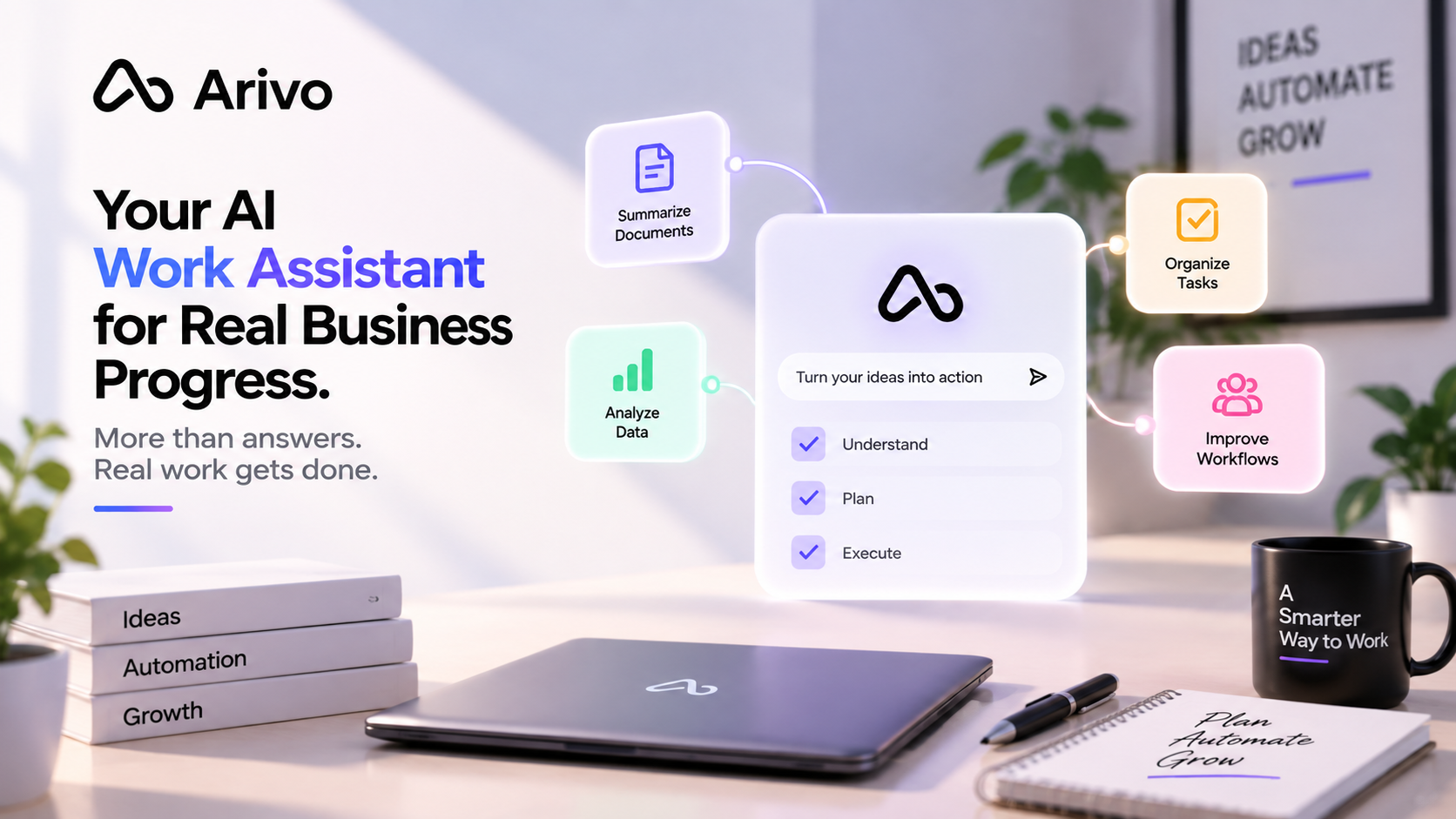
An AI work assistant is an AI-powered tool designed to help people complete practical work.
It can support tasks such as:
- organizing information;
- summarizing documents;
- preparing first drafts;
- analyzing data;
- managing tasks;
- identifying next steps;
- supporting recurring workflows.
The main difference is that an AI work assistant is focused on helping work move forward.
Instead of only providing information, it can help organize, prepare, and structure the steps needed to complete a task.
How Does an AI Work Assistant Work?
An AI work assistant usually works with information you provide and helps turn it into a useful result.
For example, you might provide:
- a document;
- a customer request;
- meeting notes;
- spreadsheet data;
- a list of tasks;
- a project brief.
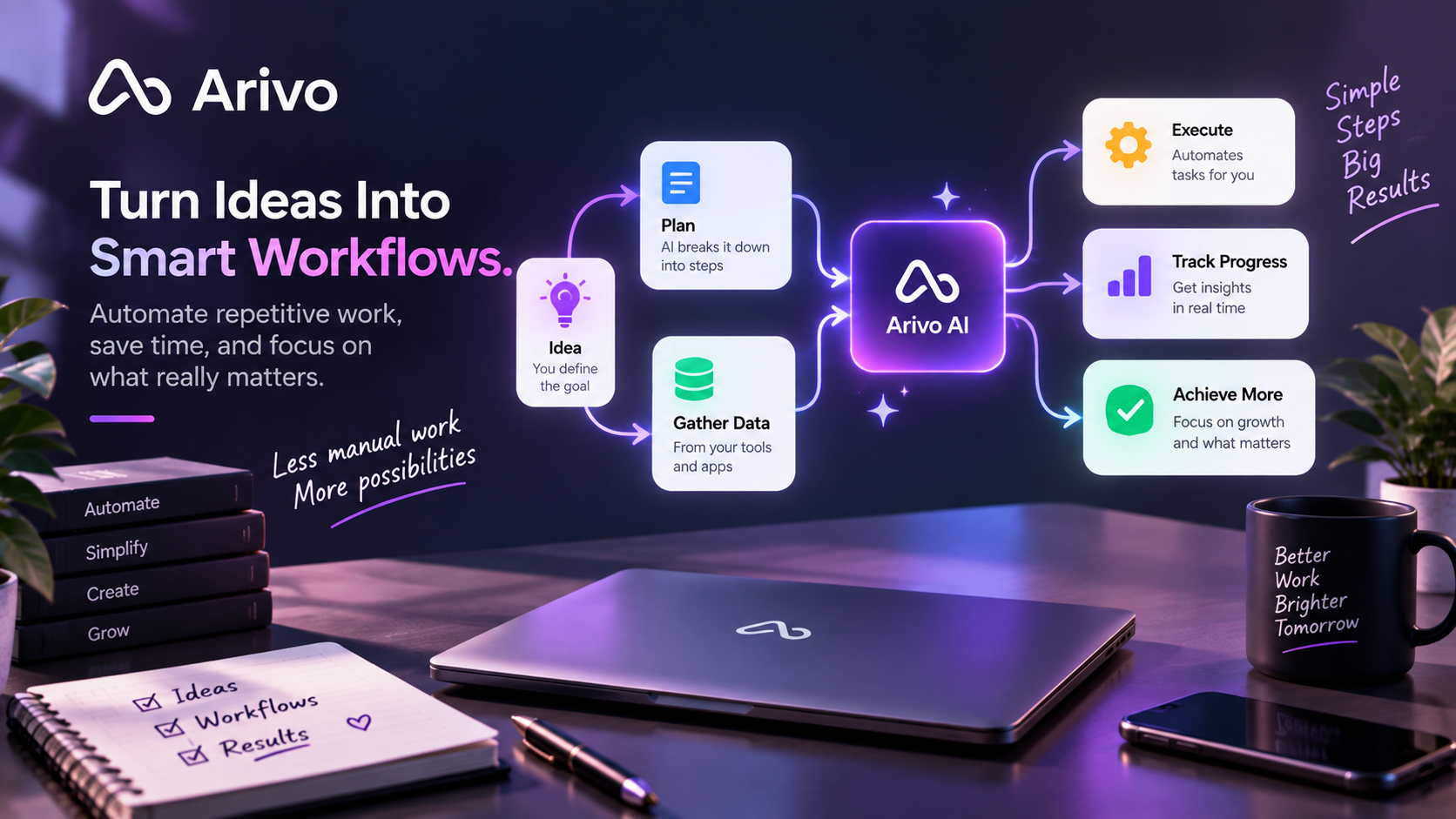
The assistant can then help:
- understand the information;
- identify what matters;
- organize the content;
- suggest or prepare the next step;
- create a draft or structured result;
- send the work for human review.
This creates a more useful process than repeatedly starting from scratch.
When several steps are connected, the assistant can become part of an AI workflow.
AI Work Assistant vs. AI Chatbot
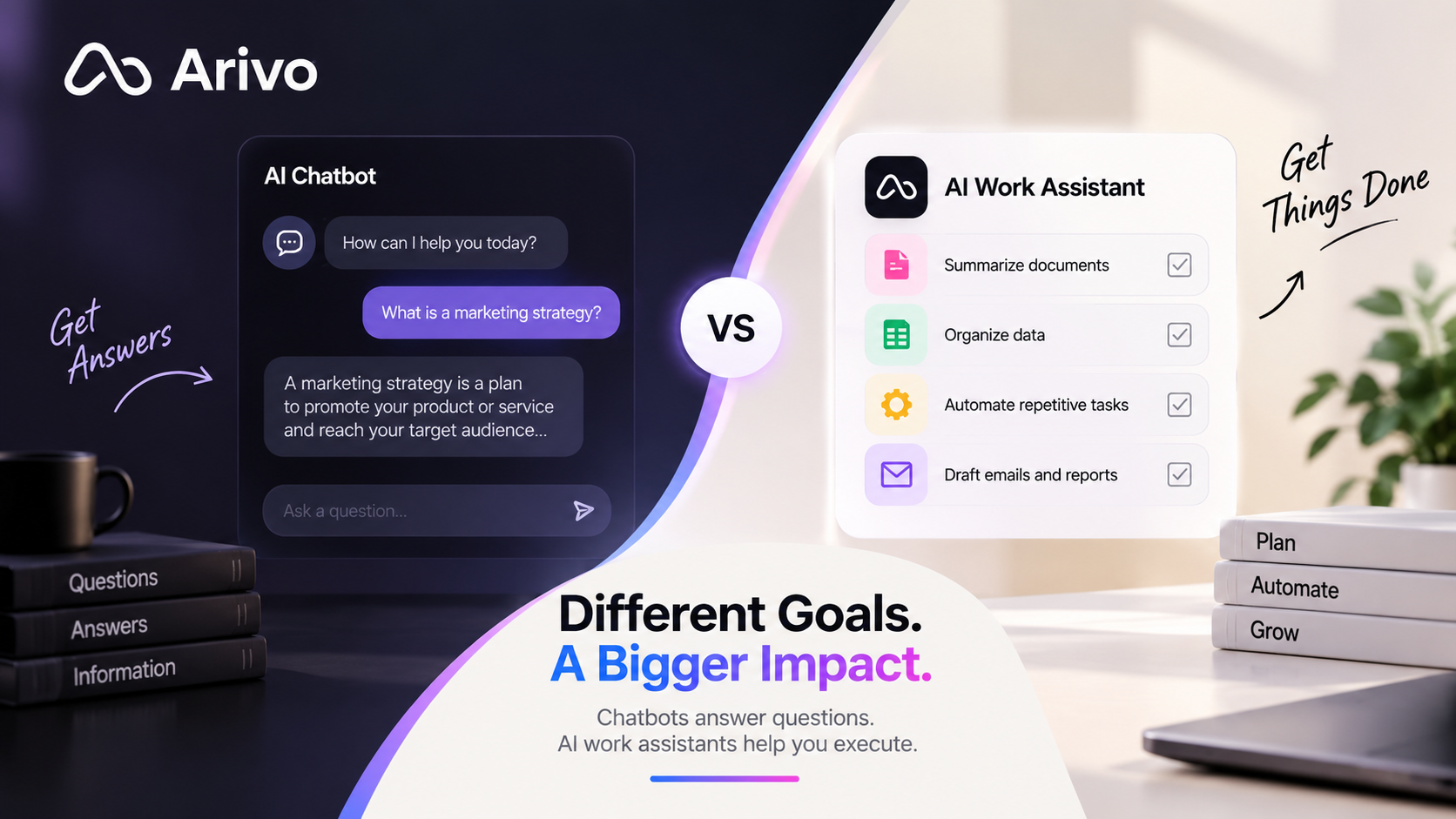
AI chatbots and AI work assistants can use similar technology, but they are designed for different types of interaction.
A chatbot is usually focused on conversation.
You ask a question, and it provides an answer.
For example:
“What are the main points in this document?”
An AI work assistant can go further.
It could summarize the document, extract action items, organize the information, create tasks, and prepare a follow-up draft.
The difference is simple:
A chatbot helps answer.
An AI work assistant helps move work forward.
If you want a deeper comparison, read our guide on AI work assistants vs AI chatbots.
What Can an AI Work Assistant Help With?
AI work assistants can support many everyday business tasks.
Documents
They can summarize documents, extract important information, organize notes, and create first drafts.
If you regularly work with documents, see our guide on how to use AI with Google Docs.
Data and Spreadsheets
An AI work assistant can help explain data, identify patterns, suggest formulas, and prepare summaries.
You can find practical examples in our guide on how to use AI with Google Sheets.
Tasks and Planning
AI can help organize a task list, identify priorities, and suggest what should happen next.
Communication
It can help draft routine emails, follow-up messages, internal updates, and customer responses.
Meetings
Meeting notes can be turned into decisions, tasks, deadlines, and follow-up actions.
Content
Ideas and notes can be turned into outlines, first drafts, product descriptions, reports, or social media content.
The value comes from reducing repetitive preparation while keeping important decisions with the person responsible.
How Can an AI Work Assistant Help a Business?
For a business, the biggest benefit is usually time.
Many small tasks do not seem difficult individually, but together they can consume hours every week.
An AI work assistant can help reduce that workload.
Reduce Repetitive Work
Tasks that follow the same steps can often be simplified.
This includes organizing information, creating standard drafts, preparing reports, and processing recurring requests.
For more examples, see how to automate repetitive work with AI.
Improve Consistency
A structured AI process can help make recurring work more consistent.
Instead of approaching the same task differently every time, the assistant can follow a defined process.
Organize Information Faster
AI can turn large amounts of unstructured information into summaries, categories, tasks, or next steps.
Help Teams Focus on Higher-Value Work
When repetitive preparation takes less time, people can focus more on customers, decisions, creativity, strategy, and problem-solving.
AI Work Assistants and AI Workflows
An AI work assistant becomes especially useful when it is connected to repeatable workflows.
For example, imagine a business receives a new customer request.
A workflow could:
- receive the request;
- identify the customer’s main need;
- categorize the request;
- create a task;
- prepare a draft response;
- send the result for review.
The AI work assistant helps complete one or more of these steps.
This is why AI work assistants and AI workflows often work well together.
If you are new to this concept, read what AI workflows are and how they work.
Where Should Humans Stay Involved?
An AI work assistant should not replace human judgment in every situation.
Human review is especially important for:
- financial decisions;
- contracts;
- sensitive information;
- customer disputes;
- legal matters;
- important business decisions.
AI can help prepare information and reduce repetitive work, but the final decision should stay with the appropriate person when accuracy, context, or responsibility matters.
The best use of AI is often a combination of automation and human review.
Who Can Benefit From an AI Work Assistant?
AI work assistants are not only useful for large companies.
They can also help:
Freelancers
Organize projects, prepare drafts, manage notes, and reduce administrative work.
Small Business Owners
Handle recurring tasks, organize customer requests, prepare content, and manage information.
Creators
Turn ideas into outlines, drafts, plans, and reusable workflows.
Teams
Organize shared information, summarize meetings, prepare updates, and improve repeatable processes.
Entrepreneurs
Reduce routine work and spend more time on decisions, customers, and growth.
If your main goal is to save time and improve everyday productivity, see our guide on how to be more productive using AI.
How to Start Using an AI Work Assistant
You do not need to automate your entire business.
Start with one recurring task.
Ask:
- What task do I repeat often?
- Which part takes the most time?
- Which steps follow a predictable pattern?
- Where could AI prepare the first version?
- Where should a human review the result?
Then test one small workflow.
If it saves time and produces a useful result, improve it gradually.
The goal is not to add more tools or complexity.
The goal is to make everyday work simpler.
Frequently Asked Questions
What does an AI work assistant do?
An AI work assistant helps with practical tasks such as organizing information, summarizing documents, preparing drafts, analyzing data, managing tasks, and supporting recurring workflows.
Is an AI work assistant the same as a chatbot?
No. A chatbot is usually focused on answering questions in a conversation, while an AI work assistant is designed to help complete or organize practical work.
Can an AI work assistant automate tasks?
Yes. It can support automation by helping with predictable parts of a process, especially when connected to structured AI workflows.
Can small businesses use AI work assistants?
Yes. Small businesses can use AI work assistants to reduce repetitive work, organize information, prepare drafts, manage recurring tasks, and save time.